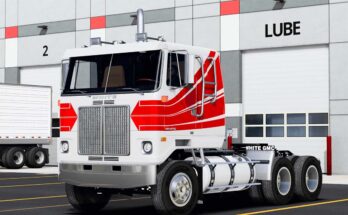
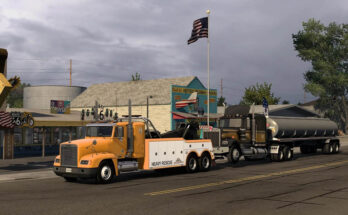
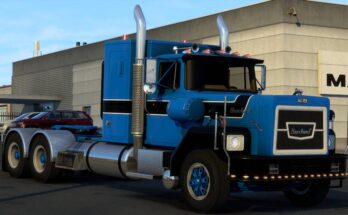
The International Transtar CO-4070A (often misidentified as the 4170A) is a legendary heavy-duty cabover (COE) truck produced by International Harvester. Introduced in 1968, it was a flagship model that set the standard for regional and long-haul transport in the late 1960s and early 1970s.
While there was a specific “Conco” (4100 series) variation, the 4070A is the most widely recognized version of this era, famously known for its “trapezoidal” grille and its presence in popular culture and simulation games like SnowRunner.
Historical Context & Design
The Transtar replaced the previous CO-4000 series. It was designed to compete with industry giants like Freightliner and Kenworth. Its key design features included:
- Aerodynamic Shape: Unlike the flat-panel trucks of the time, the Transtar featured curved cab contours to improve fuel efficiency and aesthetics.
- Hydraulic Tilt Cab: The cab could tilt forward 90 degrees using hydraulic cylinders, allowing mechanics easy access to the engine.
- Aluminum Construction: To maximize payload, many cabs were constructed of lightweight aluminum.
Technical Specifications (Typical)
The Transtar was highly customizable, but common configurations included:
-
- Engine Options: It was typically powered by Cummins (NTC250/350), Detroit Diesel (8V-71 or 8V-92), or Caterpillar engines.
- Transmission: Usually paired with a Fuller Roadranger (10, 13, or 15-speed) manual gearbox.
- Configuration: Most were 6×4 (three axles, two driven), though 4×2 variants existed for lighter regional work.
- Axles: Built with heavy-duty Meritor or Dana Spicer axles.
The “Conco” Variant (4100 series)
The name “Conco” refers to a specific configuration introduced around 1974 (International Harvester Transtar 4100 Conco).
- Purpose: It was a “short-cab” conventional/cabover hybrid designed to maximize trailer length while staying within strict legal length limits of that era.
- Distinction: The Conco was unique because the cab was offset, and the engine was partially tucked under the cab to save space.
Credits:
Rafael Mogollon. Smarty for 3D modeling
If the download link is outdated or doesn't work, you can add your download link. (If your link is valid, we will approve it within 24 hours.)